Yuyu Lin

Hi, I'm a Ph.D. student in the Interactive Structures Lab at Carnegie Mellon University (CMU) Human-Computer Interaction Institute (HCII), advised by Prof. Alexandra Ion. I intern at Ladd Lab in the summer of 2026 at Stanford University School of Medicine, advised by Dr. Amy Ladd and Deborah Kenney.

I develop robotic functionality through mechanical intelligence. Working at the intersection of HCI, mechanical engineering, computer graphics, and medicine, I introduced a new class of fully passive assistive wearables that mimic the adaptive behaviors of robotic systems. I design, computationally model, and fabricate these personalized, fully unpowered devices, which are evaluated with clinicians and patients.

Before joining CMU, I pursued my master's degree in Computer Science at Stanford University. I did my undergrad and master's in Industrial Design at Zhejiang University, where I'm honored to be one of the Morningside Cultural China Scholars.

Contact me: yuyulin@andrew.cmu.edu

Google Scholar | Github | CV

News

  • 07/2026: Gave a talk at the CHARM Lab at Stanford!
  • 06/2026: Gave a talk at the Morphing Matter Lab at UC Berkeley!
  • 05/2026: Gave a talk at BNBU
  • 01/2026: Gave three talks at Zhejiang University, Tsinghua University and China Academy of Art

Robotic functionality through mechanical intelligence

Robotic functionality through mechanical intelligence

I realize capabilities typically found only in actuated robotic systems within fully passive structures. By sensing, deciding, and responding solely through their geometries, these structures dynamically adjust to both environmental context and user needs without the need for motors, sensors, or batteries. These mechanically intelligent devices combine the low-cost and lightweight benefits of static devices with the multifunctional, personalized adaptability of active robotic systems.

Unpowered Intelligence

Towards Accessible Mobility Support: User-Centered Design of a Passive, Multi-Functional, Low-Cost Knee Exoskeleton

Towards Accessible Mobility Support: User-Centered Design of a Passive, Multi-Functional, Low-Cost Knee Exoskeleton (CHI'26)

Yuyu Lin, Yujia Liu, Emma Kim, Alexandra Ion

Walking aids are critical for people with mobility impairments. In this paper, we propose a fully passive knee exoskeleton design that combines the accessibility of static braces with the adaptive functionality of robotic systems. Our design employs a mechanical trigger under the foot to lock and release the knee joint in sync with the gait cycle, enabling more natural walking without electronics or actuation.

Personalized Bistable Orthoses for Rehabilitation of Finger Joints

Personalized Bistable Orthoses for Rehabilitation of Finger Joints (UIST'25)

Yuyu Lin, Dian Zhu, Anoushka Naidu, Kenneth Yu, Deon Harper, Eni Halilaj, Douglas Weber, Deborah Ellen Kenney, Adam J. Popchak, Mark Baratz, Alexandra Ion

Best Demo Honorable Mention (Jury's Choice)

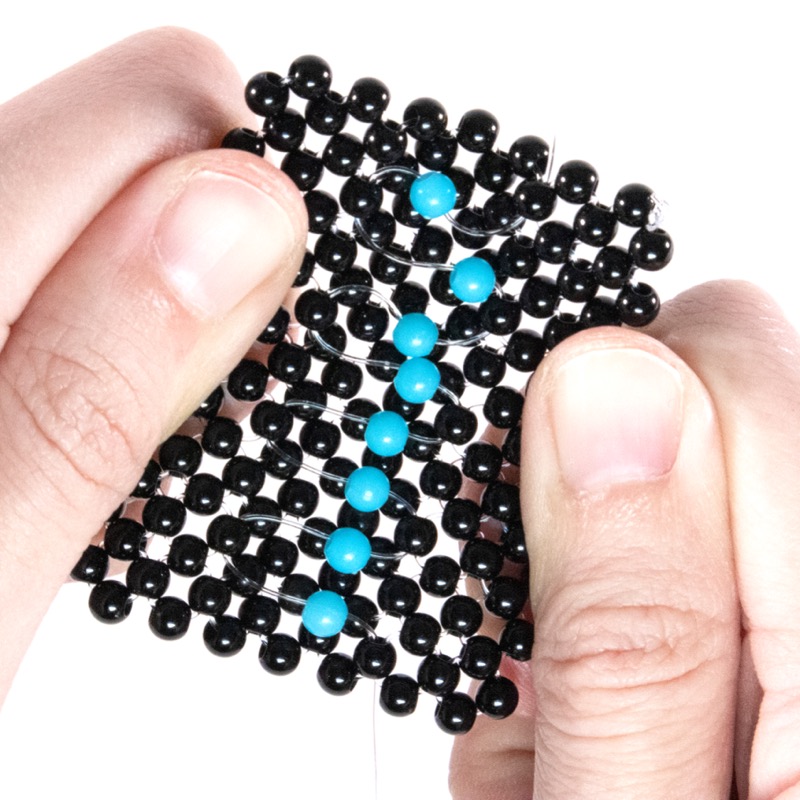
Current orthoses immobilize fingers. To facilitate both rehabilitation and dexterity, we introduce a novel multifunctional yet unpowered finger orthosis design. Our design supports easy switching between two distinct states: a stiff state for immobilization and a flexible state for mobilization.

Wearable Material Properties: Passive Wearable Microstructures as Adaptable Interfaces for the Physical Environment

Wearable Material Properties: Passive Wearable Microstructures as Adaptable Interfaces for the Physical Environment (CHI'25)

Yuyu Lin, Hatice Gokcen Guner, Jianzhe Gu, Sonia Prashant, Alexandra Ion

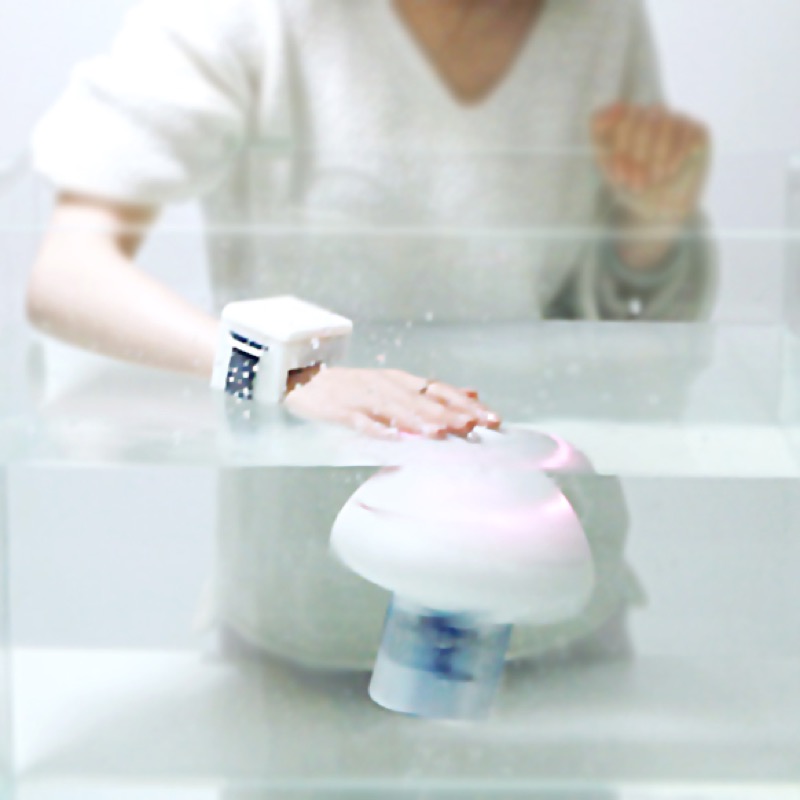
Users interact with static objects daily, but their preferences and needs may vary. Making the objects dynamic or adaptable requires updating all objects. Instead, we propose a novel wearable interface that empowers users to adjust perceived material properties.

Earlier work: Robotic Intelligence

ConeAct: A Multistable Actuator for Dynamic Materials

ConeAct: A Multistable Actuator for Dynamic Materials (CHI'24)

Yuyu Lin, Jesse T. Gonzalez, Zhitong Cui, Yash Rajeev Banka, Alexandra Ion

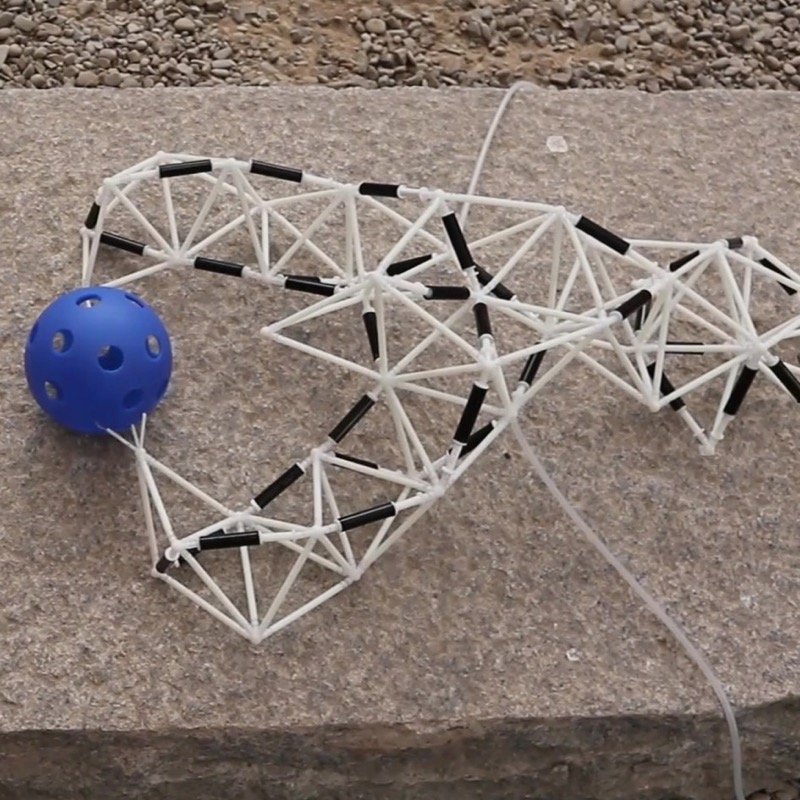
In this paper, we propose ConeAct, a cone-shaped actuator that can extend, contract, and bend in multiple directions to support rich expression in dynamic materials. A key benefit of our actuator is that it is self-contained and portable as a whole system. We designed our actuator’s structure to be multistable to hold its shape passively, while we control its transition between states using active materials, i.e., shape memory alloys.